Pecans: The Powerhouse Nut Packed with Flavor, History, and Health Benefits

Pecans: The Powerhouse Nut Packed with Flavor, History, and Health Benefits

Pecans are more than just a delicious nut – they are a powerhouse of flavor, nutrition, and history. Native to North America, these rich, buttery nuts have been a staple in Southern cuisine for centuries, starring in everything from classic pecan pie to savory dishes and healthy snacks. Packed with antioxidants, healthy fats, and essential vitamins, pecans offer a tasty way to boost heart health and energy levels. Foodies, health enthusiasts, and simple fans of their irresistible crunch know that there is plenty to love about this versatile nut.

What Is a Pecan?

The pecan (Carya illinoinensis) is a type of nut that comes from a species of hickory tree native to North America. Known for their rich, buttery flavor and crisp texture, pecans are widely used in both sweet and savory dishes. They are packed with healthy fats, protein, fiber, and essential nutrients like magnesium and vitamin E, making them a nutritious addition to any diet. Pecans are particularly famous for their role in classic desserts like pecan pie but are also enjoyed in salads, cereals, and snacks.

Where Did Pecans Come From?

Pecans are native to the southern United States and northern Mexico, where they have been an important food source for Indigenous peoples for thousands of years. The name “pecan” originates from an Algonquian word meaning “a nut requiring a stone to crack.” European settlers quickly recognized the value of pecans, and by the 18th century, they were being cultivated and traded. Today, the U.S. – especially Georgia, Texas, and New Mexico – is one of the largest producers of pecans, with the nut playing a significant role in Southern cuisine and agriculture.

How Are Pecans Grown and Harvested?

Pecans grow on large, deciduous trees that can reach heights of over 100 feet and live for centuries. These trees require a long growing season and thrive in warm climates with well-drained soil. Pecan trees are typically planted in orchards, where they begin producing nuts after about six to ten years. Each year, the trees bloom in spring, and the nuts develop throughout the summer before maturing in the fall. Harvesting occurs between October and December when the outer husks split open, allowing the nuts to drop naturally. Farmers use mechanical shakers to gently shake the trees, causing the pecans to fall to the ground, where they are collected, cleaned, and processed for sale.

Are Pecans Healthy?

Pecans offer a variety of health benefits, making them a nutritious addition to a balanced diet.

Here are a few of the key benefits:

  • May Support Heart Health: Pecans are rich in monounsaturated and polyunsaturated fats, which help lower bad cholesterol (LDL) and increase good cholesterol (HDL). Their high antioxidant content, including vitamin E and flavonoids, also helps reduce inflammation and protect against heart disease.
  • May Support Brain Function: The healthy fats and antioxidants in pecans may contribute to brain health by reducing oxidative stress and inflammation, which are linked to cognitive decline. They also contain essential nutrients like thiamine and copper, which support neurological function.
  • Can Aid in Digestion: Pecans are a good dietary fiber source, promoting healthy digestion by supporting gut bacteria and preventing constipation. Fiber also helps regulate blood sugar levels by slowing the absorption of sugar into the bloodstream.
  • Can Help to Manage Weight: Despite being calorie-dense, pecans can support weight management when consumed in moderation. Their combination of healthy fats, protein, and fiber helps promote satiety, reducing the likelihood of overeating.
  • Can Help to Support Bone Health: Pecans contain essential minerals like calcium, magnesium, and phosphorus, which contribute to strong bones and may help reduce the risk of osteoporosis. Magnesium, in particular, plays a crucial role in bone density and overall skeletal health.
  • May Reduce Inflammation: The antioxidants and healthy fats in pecans help combat inflammation, which is linked to chronic diseases like arthritis, diabetes, and cardiovascular issues. Regular consumption may contribute to reduced markers of inflammation in the body.
  • May Help to Regulate Blood Sugar Levels: Pecans have a low glycemic index and contain compounds that help improve insulin sensitivity, making them a beneficial choice for people with diabetes or those looking to manage blood sugar levels.
  • May Help to Boost Immunity: With a rich supply of vitamins and minerals, including zinc, manganese, and vitamin A, pecans help strengthen the immune system and support overall wellness.

Incorporating pecans into your diet can offer a delicious and nutritious way to support your health. Just be mindful of portion sizes, as they are calorie-dense. Always consult a trained physician if you have any nutrition or dietary change questions.

What Are Some Tasty Ways To Enjoy Pecans?

Pecans are incredibly versatile and can be enjoyed in a variety of ways, whether you prefer them raw, roasted, sweet, or savory.

Here are some fantastic ways to enjoy pecans:

  • Eat Them Raw or Roasted: Pecans are delicious straight out of the shell or lightly roasted for a deeper, nuttier flavor. Roasting them in the oven at 350°F (175°C) for about 7-10 minutes enhances their taste and crunch.
  • Add to Salads: Sprinkle chopped or whole pecans on salads for extra crunch and a boost of healthy fats. They pair well with leafy greens, dried fruits, cheese, and vinaigrettes.
  • Coat Proteins for a Crunchy Crust: Use crushed pecans as a coating for chicken, fish, or tofu for a flavorful, crispy crust when baked or pan-fried.
  • Make Candied Pecans: Coat pecans in a mixture of sugar, cinnamon, and butter, then bake for a delicious sweet treat. Candied pecans make a great snack or topping for desserts and yogurt.
  • Use in Baking: Pecans are a classic ingredient in baking. Add them to Pecan pie, a Southern favorite with a rich, caramel-like filling; cookies and brownies for extra texture and nuttiness; banana bread or muffins enhance flavor and add crunch.
  • Blend into Nut Butter: Pecan butter is a creamy, naturally sweet peanut or almond butter alternative. Simply blend roasted pecans with a little salt and honey until smooth.
  • Stir Into Oatmeal or Yogurt: Chopped pecans add a delightful crunch to your morning oatmeal or yogurt, along with extra protein and fiber.
  • Pair with Cheese and Charcuterie: On a charcuterie board, Pecans complement cheeses like brie, goat cheese, and cheddar. Add dried fruit and honey for a gourmet snack.
  • Mix into Granola or Trail Mix: Combine pecans with dried fruits, seeds, and dark chocolate for a homemade trail mix that is perfect for snacking on the go.
  • Make Pecan Milk: Blend pecans with water, vanilla, and a touch of sweetener to create a rich, dairy-free nut milk that is great in coffee, smoothies, or cereal.

No matter how you enjoy them, pecans bring a delicious crunch and a nutritional boost to your meals.

What are your favorite ways to enjoy pecans? Let us know in the comments!
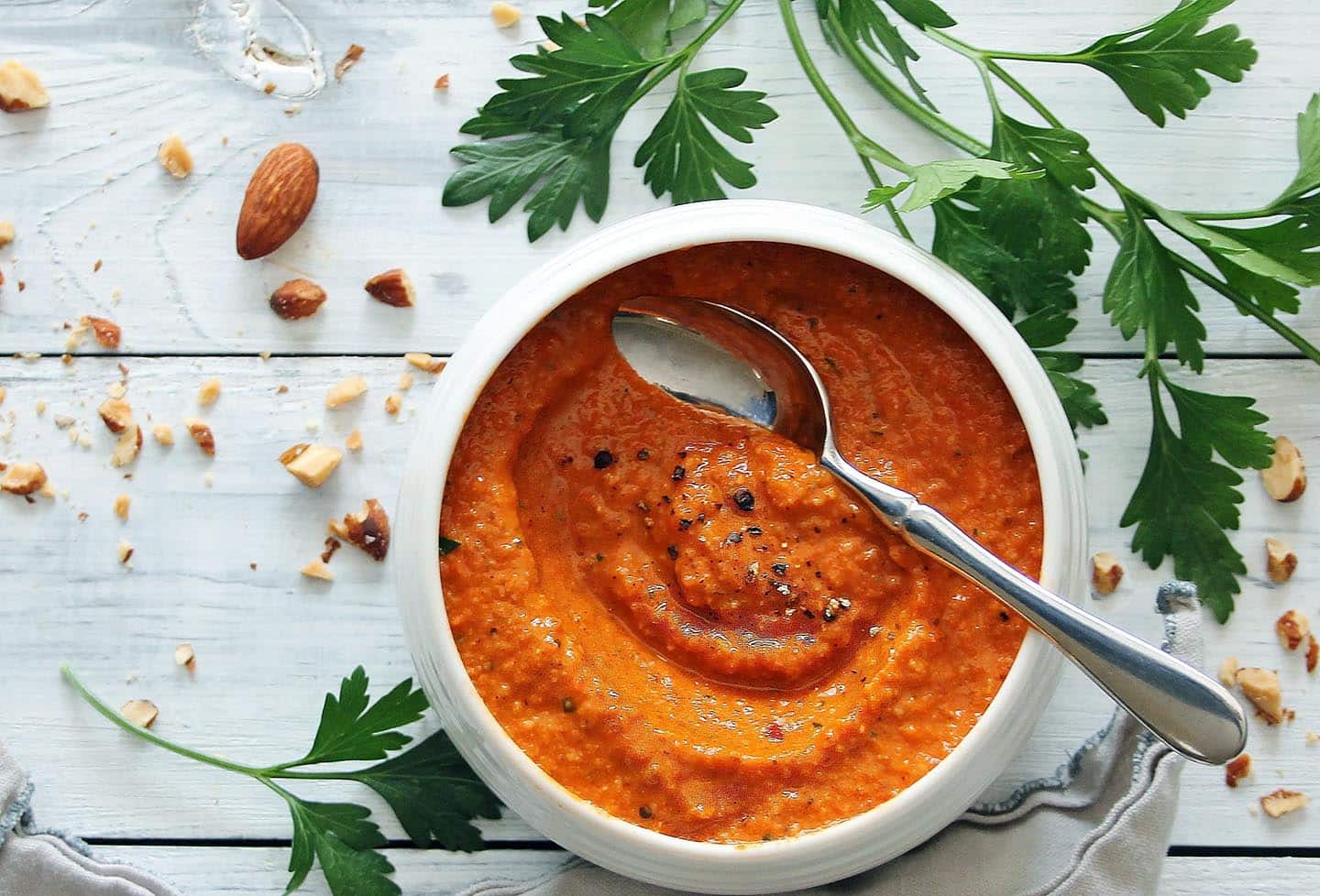
What is Romesco?

romesco sauce

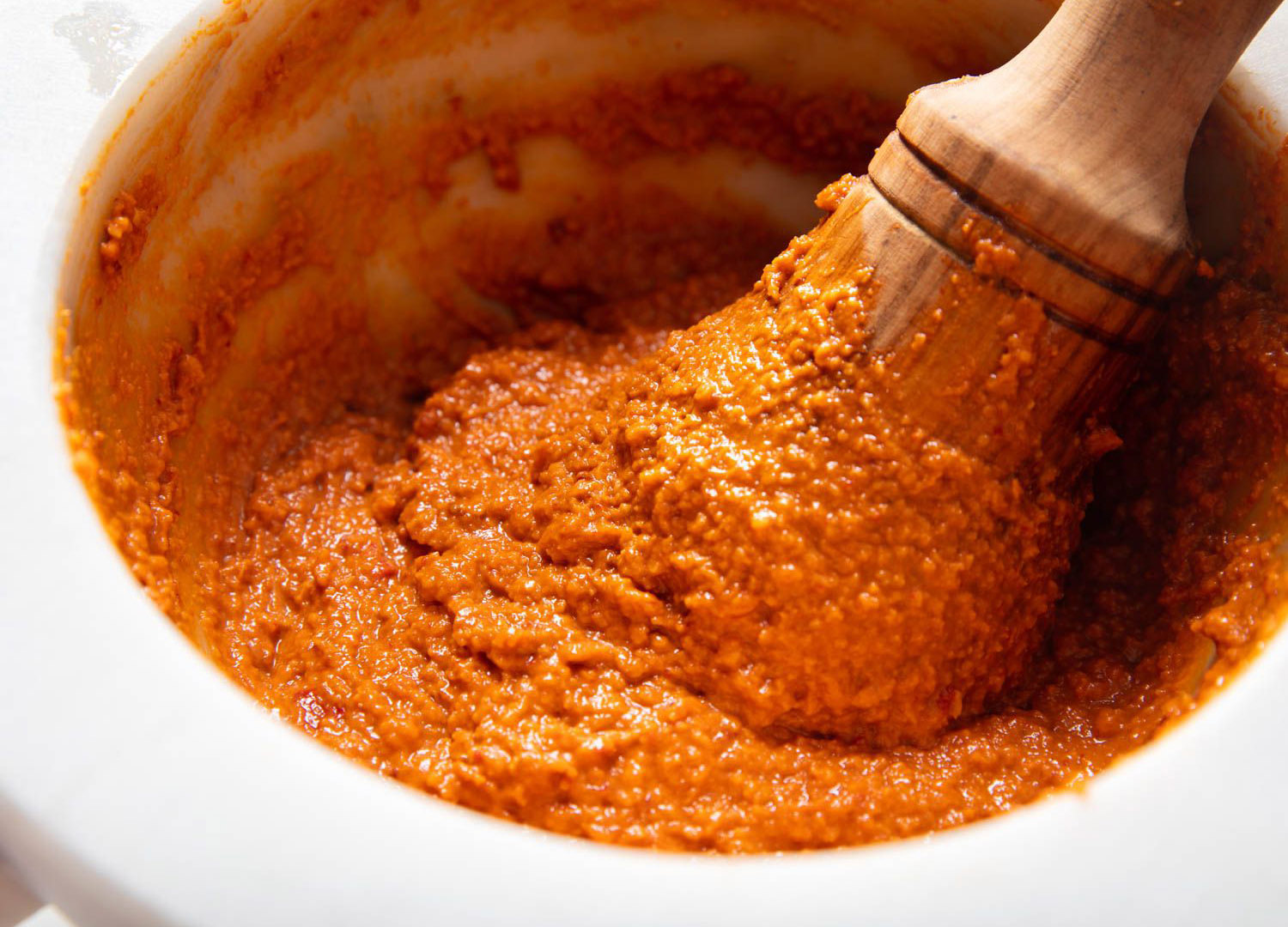
Romesco is a vibrant and flavorful Spanish sauce originating from Catalonia, known for its rich, smoky, and slightly tangy profile. It is traditionally made with roasted red peppers, tomatoes, garlic, almonds or hazelnuts, olive oil, and sherry vinegar. The ingredients are blended to create a thick, creamy texture that pairs beautifully with a variety of dishes. Some variations also include bread to thicken the sauce or spices like paprika to enhance its depth of flavor.

Romesco sauce was invented during the Middle Ages. Its origins are tied to the fishing communities along the Catalan coast, where fishermen sought a versatile and flavorful accompaniment for their daily catch. Over time, Romesco evolved into a staple of Catalan cuisine, celebrated for its adaptability and rich Mediterranean flavors. Today, it remains a culinary symbol of the region’s heritage and ingenuity.

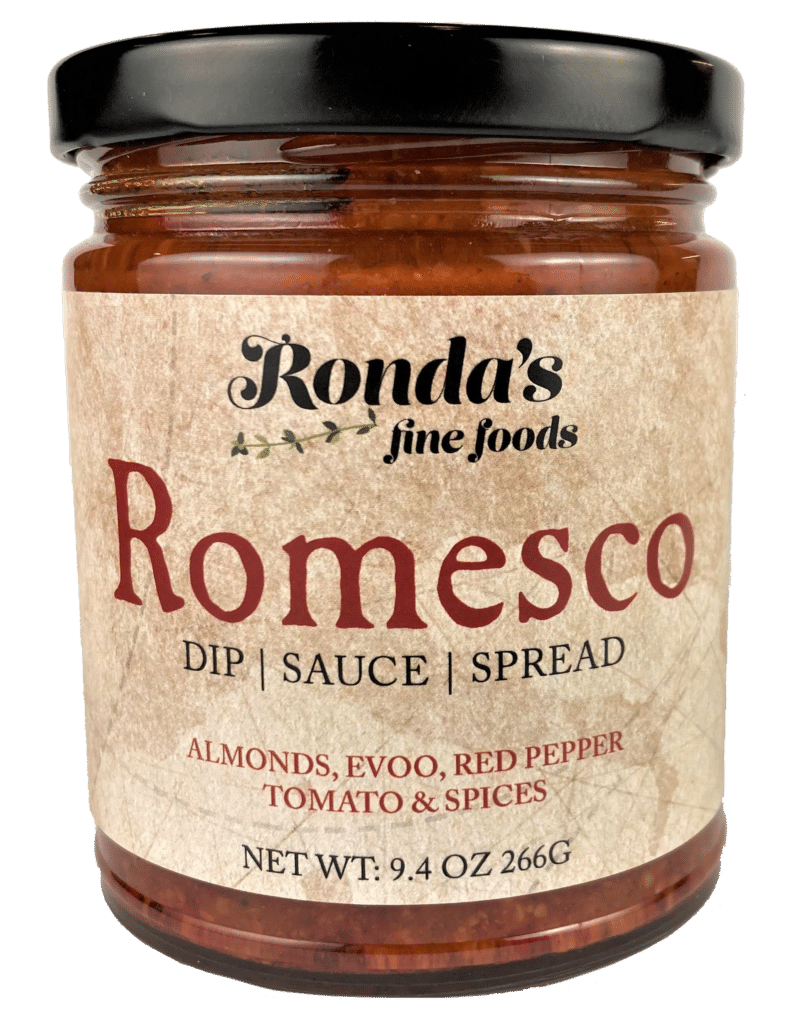
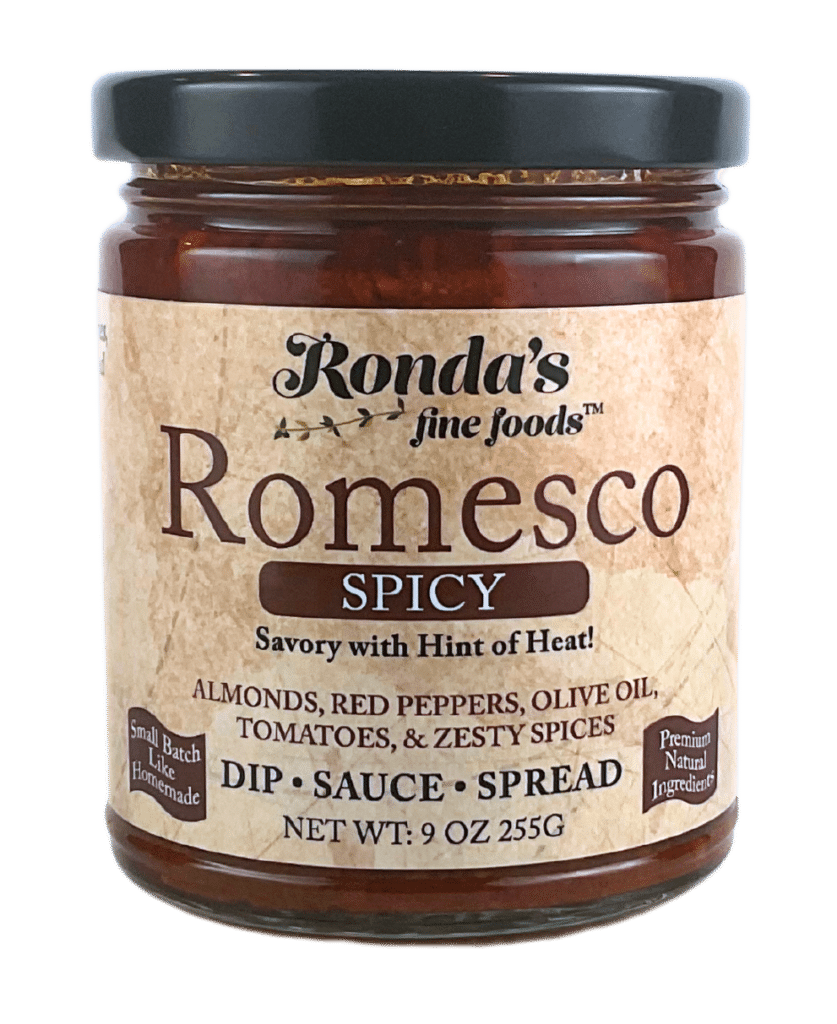
In the world of gourmet sauces, few can rival the rich history and bold flavors of Romesco, and one California company, Rhonda’s Fine Foods, has perfected it. Rooted in tradition and crafted with modern flair, Rhonda’s Romesco Sauces embody vibrant flavors and offers unparalleled versatility. Whether you’re a culinary enthusiast or simply looking to elevate your everyday meals, Rhonda’s Fine Foods brings the taste of the Mediterranean to your table with their exceptional Romesco sauces.

romesco sauce

Who is Ronda’s Fine Foods?

Nestled in the heart of California, Ronda’s Fine Foods is a family-owned business with a passion for creating unique, small-batch gourmet food items that inspire home chefs to elevate their cooking. Each sauce they offer product is designed to complement your table and help you craft beautiful, flavorful meals you’ll be proud to share with family and friends. Their philosophy is simple: exceptional food brings people together, and every meal can be a memorable experience.

The story behind Ronda’s Fine Foods is as rich and flavorful as their products. The company’s co-founders, Ronda Brittian and Steve Davis, first met in early 2018, embarking on a 7-mile hike through the picturesque Sonoma hills for their first date. That shared journey marked the beginning of not just a beautiful relationship but also a unique culinary partnership.

Ronda, a lifelong enthusiast of all things culinary, had always dreamed of creating gourmet specialty food products. Steve, with over 30 years of experience in the food industry, harbored a vision of launching his own premium product line. Together, they discovered that their individual passions and expertise formed a perfect recipe for success. Combining Ronda’s creative culinary flair with Steve’s industry know-how, the duo set out to turn their dreams into reality.

Today, Ronda’s Fine Foods stands as a testament to their dedication and shared love for exceptional cuisine. Each jar, bottle, or package they produce embodies their commitment to quality, creativity, and the joy of bringing people together over a delicious meal. Whether you’re a seasoned chef or an enthusiastic home cook, Ronda’s Fine Foods invites you to explore their gourmet offerings and discover how a small-batch product can transform your table and your dining experience.

Who is Ronda?

Ronda Brittian’s culinary story begins in the heart of a food-loving, entrepreneurial family. Raised in a home where the kitchen was the center of life, Ronda was deeply influenced by her father, Ron—a visionary who combined a love of cooking with an engaging, creative spirit. Her mother, Carol, the nurturing foundation of their household, and her grandparents, who brought the rich culinary traditions of Mexico and Southern home-style cooking, played pivotal roles in shaping Ronda’s passion for food. These early influences planted the seeds of creativity and an appreciation for bold, authentic flavors that would flourish in her later years.

Among Ronda’s greatest joys is her role as a mother to three children, whom she raised with the same emphasis on family, tradition, and food. Her kitchen became a classroom of sorts, where fresh ingredients, beloved family recipes, and explorations of diverse culinary cultures came to life. Heritage cooking remained a cornerstone of her meals, always prepared with the goal of bringing the family together. Today, the family meal remains central to Ronda’s home, a sacred ritual where love and connection are served alongside every dish.

Beyond her culinary pursuits, Ronda works as a Neurology RN at a Level 2 Trauma Hospital, where she witnesses daily the profound impact poor nutrition can have on the human body. This experience has strengthened her commitment to promoting wellness through food, exercise, and fresh air—a trilogy she believes is essential to healing the mind, body, and spirit.

Ronda’s journey, deeply rooted in family, tradition, and health, reflects her dedication to creating gourmet products that bring people together and inspire home chefs. Her vision for food goes far beyond taste; it’s about nourishing the soul and fostering connection, one meal at a time.

Who is Steve?

For Steve Davis, life revolves around family and a passion for outdoor adventure. As a proud father of three grown children and a devoted grandpa to two beloved grandchildren, Steve cherishes his role as a family man. When he’s not spending time with loved ones, you’ll likely find him cycling through scenic landscapes, embodying the perfect balance of working hard and playing harder.

Steve brings a wealth of experience to Ronda’s Fine Foods, honed over a successful career in the food industry. With decades of expertise in representing brands across the U.S. retail landscape, Steve has spent the last ten years focusing on the growth and development of emerging premium brands in the U.S. market. His passion lies in navigating the challenges and complexities of introducing start-up brands and products, finding immense satisfaction when a new product strikes a chord with customers and becomes a success.

Throughout his career, Steve has worn many hats, excelling in diverse roles such as product development, manufacturing, sales, distributor and retailer relations, operations, finance, logistics, and marketing. This broad and deep skill set positions Steve as a key driving force behind Ronda’s Fine Foods. His commitment to ensuring that every aspect of the brand delivers a positive and memorable experience—whether for consumers or retail partners—underscores his dedication to excellence.

With his expertise and passion, Steve is not just helping bring Ronda’s vision to life; he’s ensuring that Ronda’s Fine Foods makes a lasting impact in the world of gourmet food.

Gourmet Creations for the Discerning Home Chef

Though this versatile sauce was originally created to accompany seafood, its appeal has spread far beyond its coastal origins. Romesco is now often served with grilled vegetables, meats, fish, and as a dip for bread. Its bold yet balanced taste makes it a favorite addition to Mediterranean cuisine, bringing a touch of Spanish tradition to any meal. Crafted with care and using only the finest ingredients, Rhonda’s Romesco captures the essence of traditional Catalan cuisine in every jar. Whether used as a marinade, condiment, or standalone sauce, Romesco is a delicious way to elevate your culinary creations. Experience the incredible flavor that has everyone talking—grab a jar of Rhonda’s Fine Foods Romesco Sauce today> https://mizenplace.com/store/rondas-fine-foods/

What are your thoughts on Romesco? Let us know in the comments!
Berkshire Pork: A Premium Choice for Flavor and Quality

Berkshire Pork: A Premium Choice for Flavor and Quality

Berkshire pork comes from a breed of pig known as the Berkshire, which is prized for its superior flavor, tenderness, and marbling. Originating in England, this heritage breed is now highly regarded worldwide for producing some of the finest pork. What sets Berkshire pork apart is its rich, juicy flavor profile and its distinctive marbling, which contributes to its melt-in-your-mouth texture. The marbling also ensures the pork stays moist and flavorful when cooked, making it a favorite among chefs and food enthusiasts alike.

Berkshire pork has a rich history dating back to the early 18th century in England, where the Berkshire breed of pigs was first developed in the county of Berkshire. This heritage breed is one of the oldest and most revered in the world, initially bred for its hardiness and ability to thrive in the British countryside. Known for their black coats with white points on the legs, face, and tail, Berkshire pigs were prized by farmers for their ability to produce high-quality meat with exceptional marbling, a trait that would later become the breed’s hallmark.

In the 1800s, Berkshire pigs were regarded as one of the finest breeds in England, and by the early 1900s, their meat had become highly sought after, especially in gourmet and high-end markets. The pigs’ ability to grow at a slower pace and their rich marbling contributed to the tender and flavorful pork that distinguished them from other breeds. Berkshire pork was often considered a delicacy, favored by royal families and top chefs for its superior taste and texture.

However, after World War II, the popularity of Berkshire pigs declined as industrial farming practices favored faster-growing, larger breeds of pigs that were easier to manage and produced more meat in a shorter amount of time. As a result, the Berkshire breed became rare and nearly extinct in some areas. It wasn’t until the late 20th century that interest in heritage breeds, including Berkshire pigs, was revived. Farmers and food enthusiasts seeking to preserve traditional methods of raising livestock began to reintroduce Berkshire pork to the market.

Berkshire Pork: A Premium Choice for Flavor and Quality

Today, Berkshire pork is celebrated for its unique flavor and texture, and it has found a niche in both high-end restaurants and specialty markets. The breed’s revival has also helped promote sustainable farming practices, as Berkshire pigs are often raised on smaller, more humane and sustainable farms where they are given ample space to roam and are fed high-quality diets, which enhances the overall quality of the meat. The breed is known for its slower growth rate, which results in more developed muscle and fat that adds to the pork’s remarkable taste and tenderness. This high-quality pork is often considered a premium product, with cuts like Berkshire ribs, chops, and loin often sold at a higher price than conventional pork due to its superior flavor and texture. As demand for premium, flavorful pork continues to grow, Berkshire pigs are once again prized for the same qualities that made them famous over 300 years ago – exceptional taste, tenderness, and marbling that elevate any meal.

Whether cooked simply on the grill or prepared in gourmet dishes, Berkshire pork offers a richness that is unmatched by other pork breeds. It has earned a reputation as a luxury meat, and for good reason, its unique flavor and texture elevate any dish.

Ready to explore a new destination? Book your next experience now!

Have you ever had Berkshire pork? What cut? How was it prepared? What did you think? Let us know in the comments!
The Colomba Cake: Italy’s Dove-Shaped Symbol of Spring

The Colomba Cake: Italy’s Dove-Shaped Symbol of Spring

Long before Instagrammable pastries and seasonal dessert drops, Italy’s Easter tables were graced by a sweet that carries both history and symbolism: Colomba pasquale – literally “Easter dove.” The cake’s name and sculpted shape echo universal themes of peace and rebirth, deeply rooted in Christian and cultural imagery as spring celebrations unfold each year.

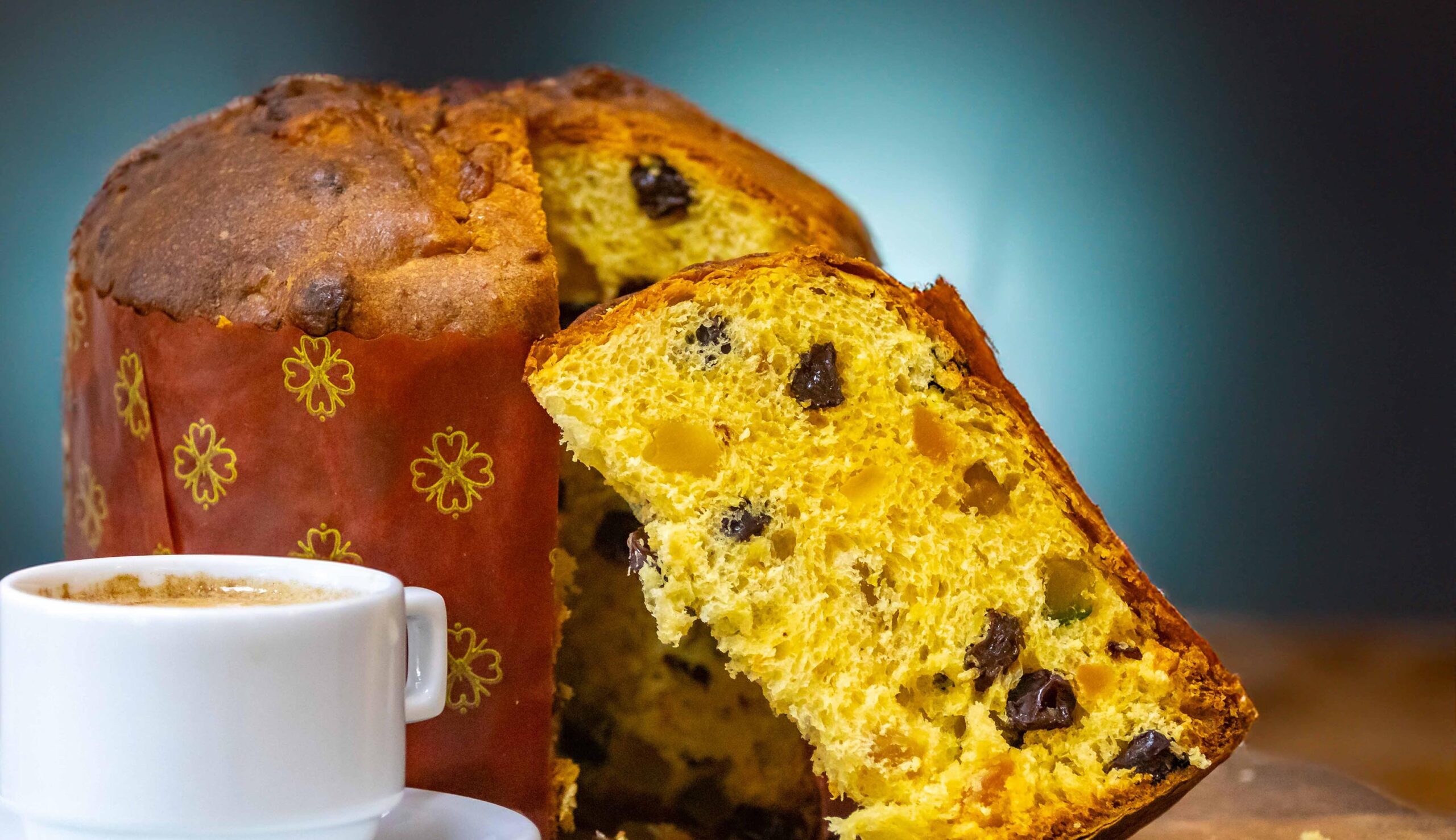
Although legends reach back centuries, with tales of Lombard kings pacified by dove-shaped breads and miraculous birds hovering over battlefields, the Colomba as we know it today took flight in the early 20th century. In the 1930s, Milanese bakers sought to extend the success of panettone (the Christmas holiday cake) into the Easter season. With the same rich dough of flour, eggs, butter, natural yeast, and sugar, they crafted a lighter, yet still indulgent loaf shaped like a dove and adorned with crunchy pearl sugar and almonds.

How is a traditional Colomba made?

The craftsmanship behind a classic Colomba is deceptively intricate. Its dough mirrors panettone’s technique, often rising for many hours to achieve a cloud-like texture. Yet, the absence of raisins, preference for candied citrus peel (especially orange), and the bird silhouette set it apart. Bakers often finish it with a glaze of pearl sugar and whole almonds that crack delightfully under the first bite.

Unlike simple cakes mixed and baked in minutes, Colomba dough typically undergoes multiple stages of fermentation and gentle handling. This slow process yields a crumb that is tender yet structured, aromatic with citrus and vanilla notes, and richly buttery without overwhelming sweetness.

Traditionally enjoyed at Easter breakfast with an espresso or cappuccino, or sliced alongside prosecco during springtime gatherings, Colomba embodies conviviality and seasonal joy.

Why Giusti’s Colomba stands out

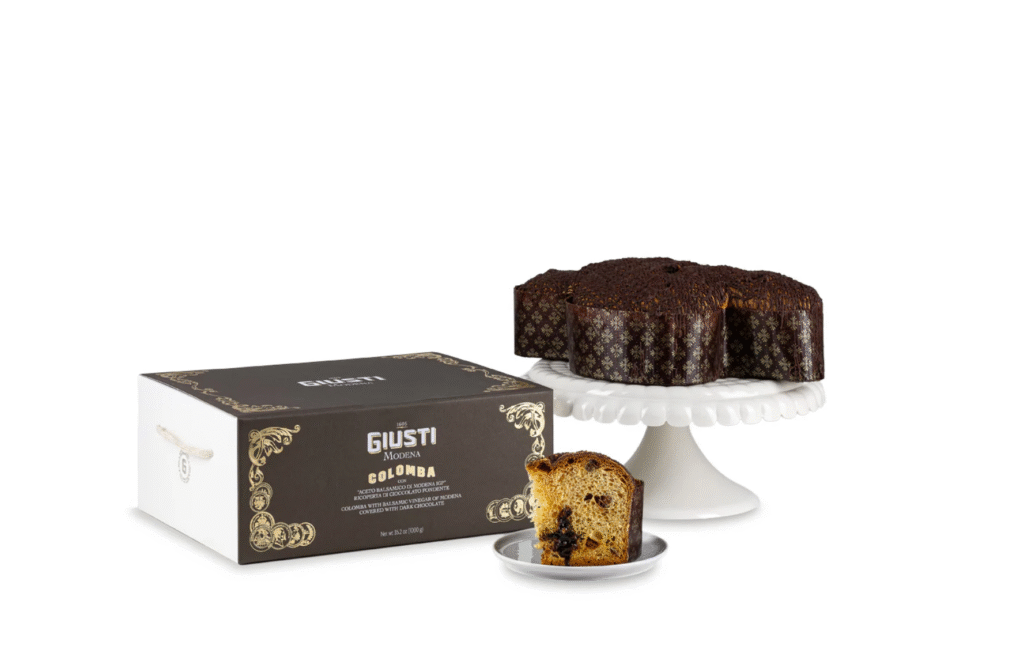
Among the many interpretations of this Italian classic, one artisanal version has garnered special attention for elevating tradition with a subtle gourmet twist: the Giusti Modena Colomba Cake. Drawing on centuries-old expertise in balsamic vinegar from Modena, Giusti infuses its Colomba with their premium Balsamic Vinegar of Modena, lending an unexpected elegance to its usual sweet profile.

In the Giusti rendition:

  • Raisins are soaked in their delicious aged balsamic, imparting a whisper of rich, sweet-tangy flavor that plays against the cake’s buttery tenderness.
  • Their award-winning balsamic is woven throughout the dough and filling, deepening its aroma and adding nuanced layers of palate appeal.
  • A dark chocolate coating crowns the cake with a luxurious contrast, turning every slice into a balance of sweet, sour, and cocoa richness.

It is this thoughtful approach, respecting the Colomba’s heritage while introducing refined flavor interplay, that makes Giusti’s version especially delicious: familiar yet surprising, comforting yet sophisticated.

A Seasonal Must-Try at Miz En Place!

Right now, for a limited time, the Giusti Colomba Cake is available on Miz En Place – a rare chance to bring an authentic piece of Italian Easter tradition into your home beyond the typical holiday season. Whether you’re celebrating spring gatherings, gifting a gourmet treat, or simply savoring a slice (or two!) with coffee, this Colomba captures both the soul of Italian pastry art and a refined twist that sets it apart.

Don’t miss this seasonal highlight – once it’s gone, you’ll be waiting until next spring to taste it again! Grab yours now!

Your Next Culinary Adventure Awaits – Let’s Create Something Unforgettable!

✈️ Browse our vacations, tours, culinary classes, and other experiences; or fill out our custom Italy adventures trip interest form – Tell us about your travel style, interests, and dream experiences. We will hand-curate a personalized Miz En Place journey just for you—crafted with care, flavor, and unforgettable moments.

📧 Have questions? Email our friendly customer service team anytime, or try the live chat function on our site! We are here to guide you, share insider insights, and help turn your travel vision into reality.

The Italian Table: An Orchestration of Life

The Italian Table: An Orchestration of Life

When I think of the Italian table, I don’t think of a single image.

I think of a composition.

An orchestration.

A performance in movements.

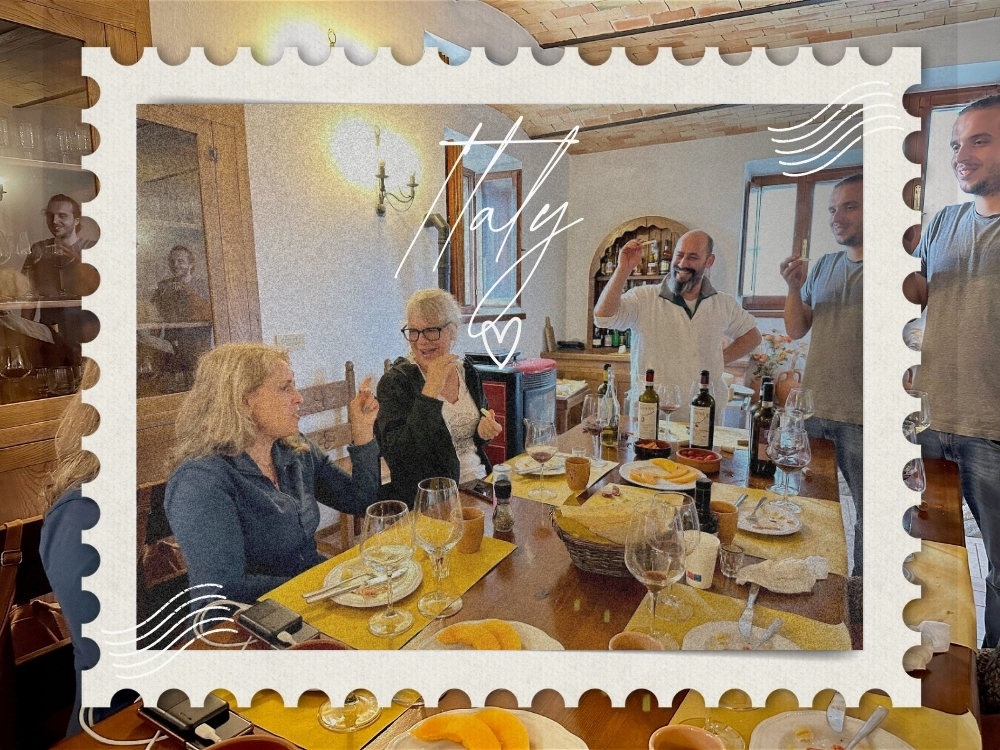
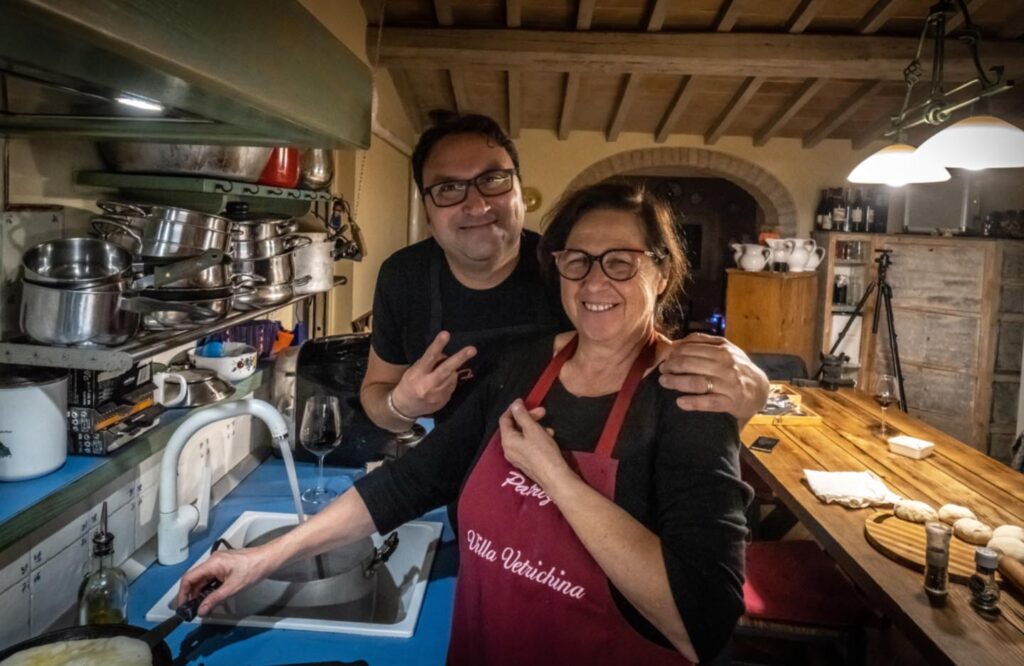
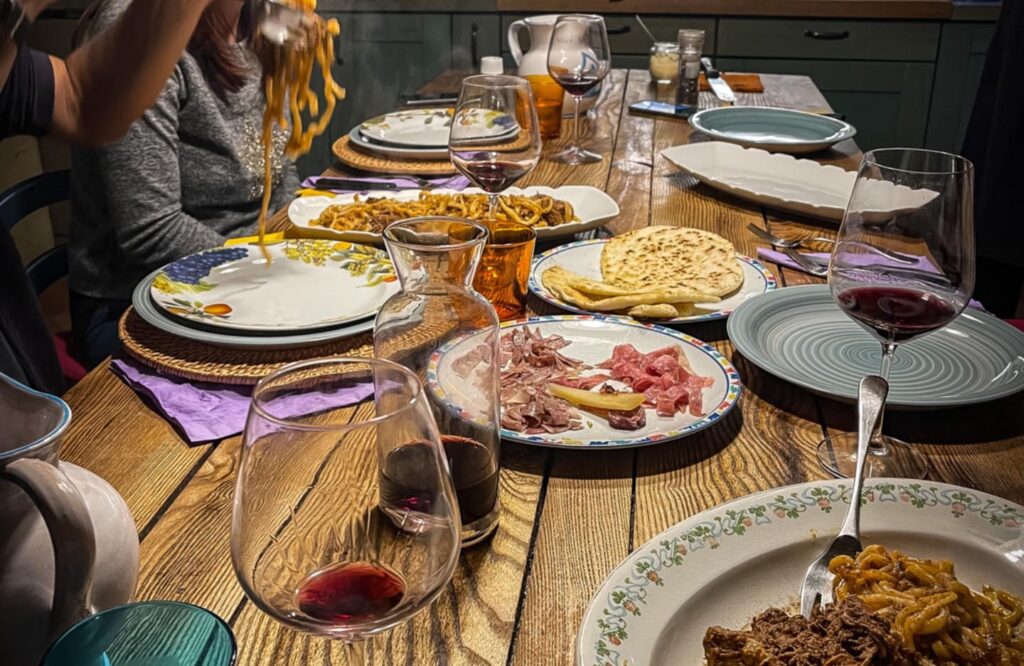
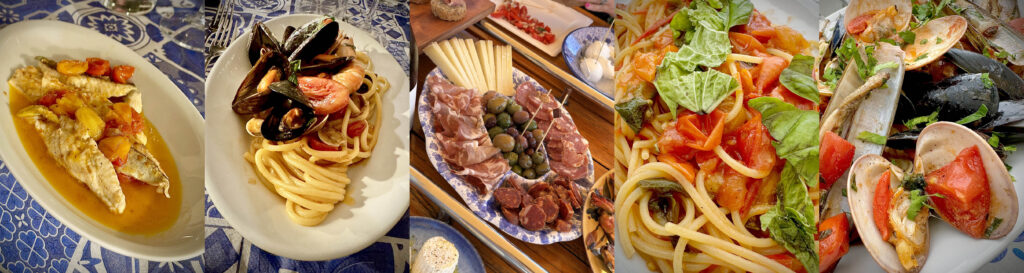
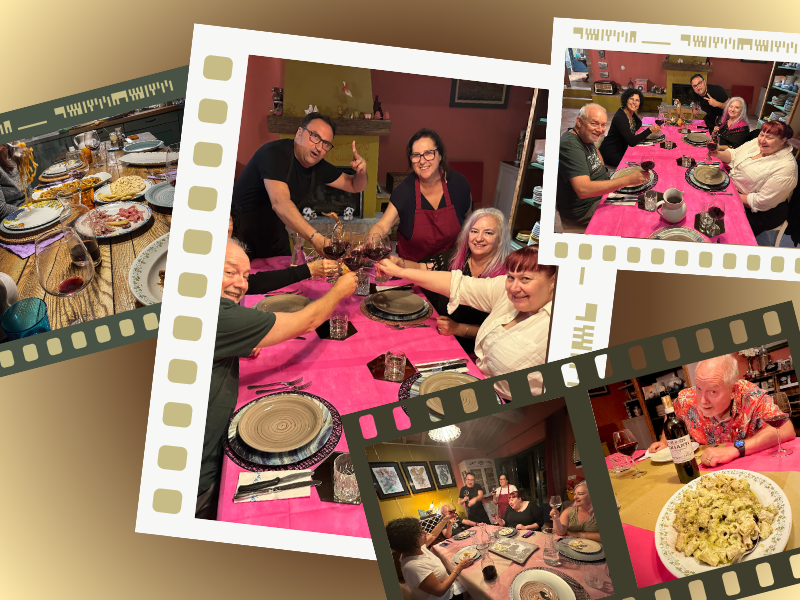
I see long, rough-hewn tables set beneath amber sunlight. Vineyards rolling in the distance. A rustic garden. The quiet hum of nature just beyond the conversation. Platters of seasonal vegetables. Grilled and cured meats. Bowls of pasta glistening with olive oil and herbs. Bottles of local wine catching the light as they’re passed from hand to hand.

Family and friends gather.

Conversation rises and falls.

Sometimes voices lift sharply — animated, emphatic — only to soften moments later with a raised glass and a hearty “Salute” or “Cin cin,” a signal that all is well, that affection remains intact.

The Italian table is not simply about food.

It is about people.

And it unfolds in movements.

The Prelude: The Kitchen

The first movement begins before anyone sits down.

In the kitchen.

Ingredients are prepared attentively — tomatoes simmering slowly, herbs chopped, meat watched carefully over flame. Someone tastes, adjusts, tastes again.

Conversation is already happening.

Stories. Gossip. Recipes debated. Techniques discussed. Memories attached to certain dishes.

The kitchen is the overture.

The warmup.

A duet of preparation and anticipation.

Inside, hands move with intention. Outside, guests begin to gather. Two conversations happening simultaneously, each unaware of how perfectly they complement the other.

The tempo builds.

The Allegretto Vivace: The Meal

Then the table fills.

Antipasti arrive. Wine is poured. Chairs scrape against stone. Plates are passed. Hands reach. Laughter erupts.

The main movement begins — allegretto vivace, lively and flowing — with occasional sforzando bursts of emphasis when a story crescendos or an opinion lands firmly.

There is rhythm to it.

Food is not rushed.

Courses unfold naturally.

A brief silence — a caesura — falls as the first bites are taken. Then conversation resumes, melodic and layered.

Every seat at the table matters.

Every voice contributes.

The Italian table is participatory. There is no audience. Only players.

The Dolce & The Adagio

Dessert arrives.

Perhaps a simple fruit tart. Perhaps tiramisu — made properly, without cream, layered and balanced.

Coffee follows.

Then digestivo.

The tempo shifts.

Adagio.

Slower. More introspective.

Conversations deepen. The light softens. The air cools. Someone leans back. Someone lights a cigarette or cigar. Glasses clink gently.

This is not about food anymore.

It is about being together.

The meal is complete, but the gathering continues.

And no one is watching the clock.

The Trattoria as One-Act Play

The small trattoria with the handwritten menu is a different kind of performance.

More contained.

The kitchen and dining room are separated by a threshold. Two acts unfolding simultaneously.

In the dining room, each table becomes its own vignette. Regulars greet servers by name. A familiar call is shouted toward the kitchen. Friends settle in.

In the kitchen, pride remains constant. Ingredients are handled with care. Plates are assembled deliberately.

Servers weave between tightly spaced chairs with fluid precision, unaffected by the choreography around them. Dishes arrive with a smile and a quiet “Buon appetito.”

Again, a moment of silence as first bites are taken.

Then the melody resumes.

Each table its own conversation.

Each conversation contributing to the larger soundscape.

As the evening winds down, the tempo softens. Adagio again. The last guests linger. The proprietor steps out to sit with regulars who have long since become friends. Lights dim. Chairs stack. The final notes fade.

More Than a Meal

The Italian table is not furniture.

It is infrastructure.

It is where culture is rehearsed daily.

Recipes are transmitted. Stories are retold. Children observe. Traditions are reinforced without formal instruction.

This is where preservation happens.

Not in museums alone — but in kitchens, on terraces, at rough wooden tables under open sky.

And when you are invited into that space — whether in someone’s home or in a small trattoria — you are stepping into a living composition.

Miz Travel is not about eating well.

It is about understanding that the table is where Italy lives.

If you sit long enough, if you listen, if you participate, you begin to hear the music.

-Rico Mandel, CEO, Miz En Place

Ready to experience Italy?

✈️ Fill out our custom Italy or Greece adventures trip interest form – Tell us about your travel style, interests, and dream experiences. We will hand-curate a personalized Miz En Place journey just for you—crafted with care, flavor, and unforgettable moments. 

📧 Have questions? Email our friendly customer service team anytime, or try the live chat function on our site! We are here to guide you, share insider insights, and help turn your travel vision into reality.

Schedule a free discovery call to learn more about a trip or experience that has caught your eye, and ask any questions—we’re here to help you plan your perfect adventure!

Screenshot_7.png

Obscure but Delicious Regional American Dishes

American foods on a picnic blanket

When most people think of American food, burgers, hot dogs, and apple pie often come to mind. While these classics have earned their place, the country’s culinary landscape is far more diverse – and frequently delightfully surprising. Regional dishes that rarely make it into mainstream menus are scattered across the United States yet offer unforgettable flavors and deep cultural roots. These are not the foods you see on postcards but the ones you remember long after the trip is over.

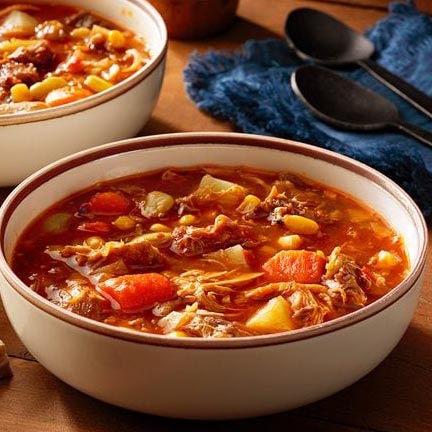
  • Burgoo: Kentucky’s Savory Stew Secret: In the heart of Kentucky, burgoo simmers slowly in large pots, filling the air with the comforting scent of smoked meats and hearty vegetables. A thick, meaty stew, burgoo is often made with a mix of pork, chicken, and mutton, along with vegetables like corn, lima beans, and okra. The recipe varies from town to town, but the purpose remains the same – bringing communities together over bowls of warm, flavorful comfort.
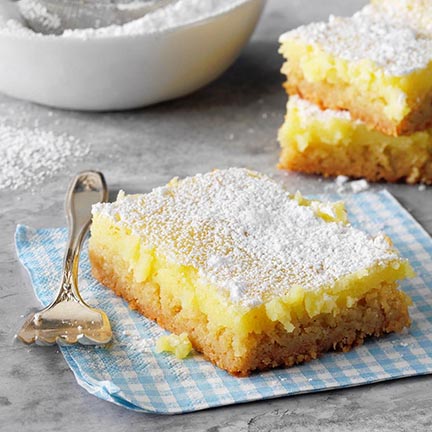
  • Gooey Butter Cake: St. Louis’ Sweet Surprise: Born from a happy baking accident in St. Louis, gooey butter cake has become a local treasure. With a dense, chewy crust and a lusciously soft center, it is a dessert that surprises and delights. Topped with a dusting of powdered sugar, this cake may not win beauty contests, but it wins hearts with every bite.
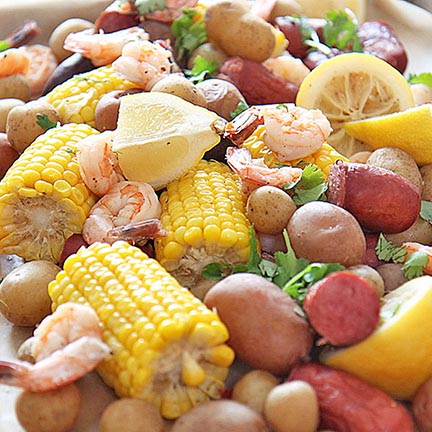
  • Frogmore Stew: A Lowcountry Boil Full of Flavor: Do not let the name fool you – Frogmore stew contains no frogs. Instead, it is a Lowcountry favorite from South Carolina, featuring shrimp, sausage, potatoes, and corn boiled together in a seasoned broth. Served communally, often poured out onto newspaper-covered tables, it is a dish that invites gathering, laughter, and plenty of napkins.
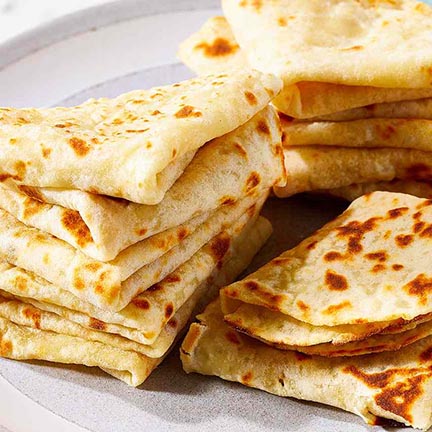
  • Lefse: Norwegian Tradition in the Upper Midwest: In the upper reaches of the Midwest, particularly Minnesota and North Dakota, lefse is a beloved tradition. This soft flatbread, made from potatoes and flour, is rolled thin and cooked on a griddle. Often spread with butter and sugar, lefse is a simple pleasure rooted in Norwegian heritage, passed down through generations and served with pride during holidays and family get-togethers.
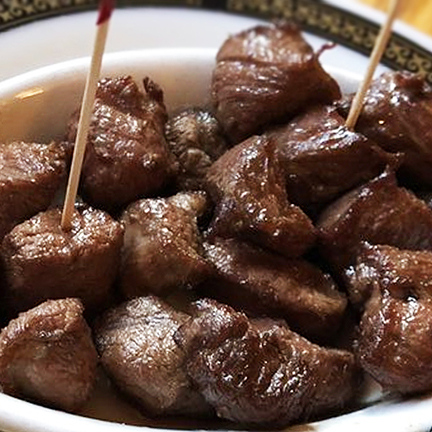
  • Chislic: South Dakota’s Meaty Gem: South Dakota offers its own surprise in the form of chislic – cubed, skewered meat, typically lamb or beef, deep-fried or grilled and sprinkled with garlic salt. It is served casually, often with saltine crackers and a cold drink. Popular at fairs and backyard parties, chislic is unpretentious, deeply satisfying, and unmistakably local.

What makes these dishes special is not just their taste, but the stories they tell. Each reflects the traditions, resources, and creativity of the people who make them. In a country as vast and varied as the United States, some of the most delicious experiences are waiting just off the beaten path. So next time you travel, look past the familiar menu items – you might discover a new favorite in an unexpected place.

Have you ever heard of or tried any of the dished here? What is your favorite American dish? Let us know in the comments!
2-pc-santoku.jpg

Casu Marzu: A Taste of Sardinia’s Boldest Tradition

Casu Marzu: A Taste of Sardinia’s Boldest Tradition

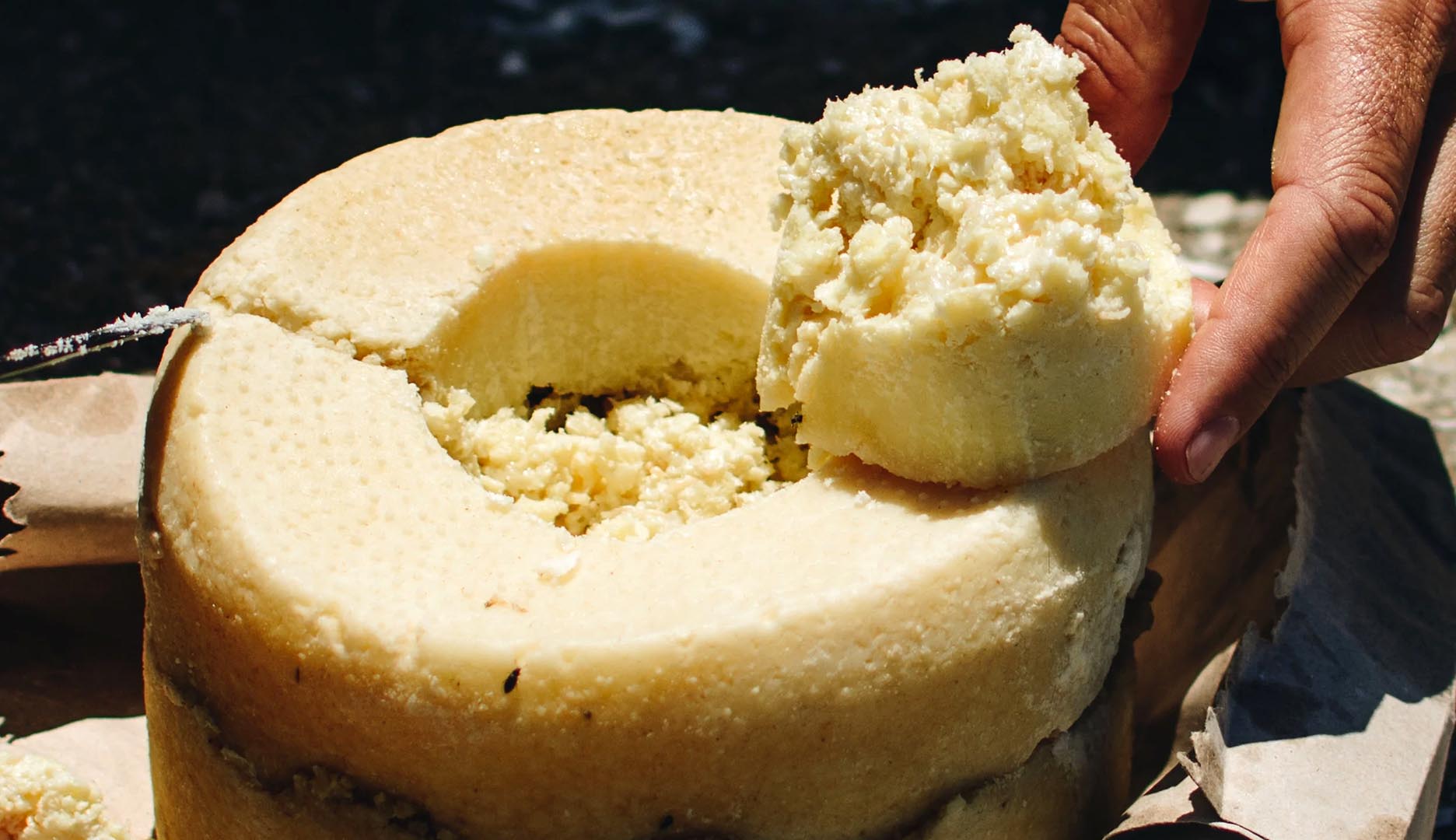
Casu Marzu, often translated as “rotten cheese,” is infamous for being one of the most pungent – and controversial – cheeses in the world. Its defining feature sets it apart: the presence of live insect larvae. Often called the world’s most dangerous cheese, Casu Marzu pushes the boundaries of fermentation and cultural culinary heritage, inspiring equal parts curiosity and revulsion among food enthusiasts.

Casu Marzu begins as a standard wheel of Pecorino Sardo, a firm sheep’s milk cheese. To create Casu Marzu, cheesemakers intentionally introduce the cheese fly (Piophila casei). These flies lay eggs in the cheese, and when the larvae hatch, they begin to digest the fats within it, breaking down the texture into a soft, almost spreadable paste. The resulting cheese has a strong, ammonia-like aroma and a rich, creamy consistency.

This unique cheese hails from the island of Sardinia, Italy, where it has been made for generations as part of the region’s pastoral traditions. It is deeply embedded in the local culture and is often reserved for special occasions such as weddings or milestone birthdays. Despite its extreme nature, many Sardinians consider Casu Marzu a delicacy that represents their culinary identity and rural heritage.

Casu Marzu is typically enjoyed in small quantities due to its intense flavor and strong aroma. It is generally served at room temperature, when the cheese is soft, creamy, and at peak pungency; it is eaten on slices of Sardinian flatbread called pane carasau, which helps balance the richness of the cheese with a crisp, neutral texture.

Many locals consume the cheese with the live larvae still wriggling inside, believing they are essential to the authentic experience and indicative of freshness. Others prefer to remove the maggots using a knife or by sealing the cheese in a paper bag and waiting until the larvae suffocate and leave the cheese.

Casu Marzu is often accompanied by a strong red wine, like Cannonau, which can hold its own against the cheese’s bold, ammonia-like flavor. The experience is typically shared and eaten among family or friends, partly as a culinary rite of passage and partly as a communal celebration of Sardinian tradition.

One last note: Casu Marzu is technically illegal under European Union food safety regulations, which prohibit the sale of food containing live insects. The cheese is considered unsafe by international standards because the larvae can survive stomach acid and potentially cause enteric myiasis, a rare but possible intestinal infestation. As a result, Casu Marzu is banned for commercial sale across the EU and in many other countries. However, Sardinians continue to produce and consume it in small, informal circles, often outside the bounds of regulation, treating it as a symbol of resistance to homogenized food laws.

Have you ever had the chance to try this unique cheese? Would you try it if you had the opportunity? Let us know in the comments!

image-10.png

Top 8 Most Asked Questions About Traveling to Italy Answered

Top 8 Most Asked Questions About Traveling to Italy Answered

Planning a trip to Italy can be exciting and overwhelming, especially with so many things to consider. From the best time to visit to navigating local customs, there is much to know to make your Italian adventure smooth and enjoyable. To help you prepare, we have compiled answers to the top 8 most frequently asked/searched questions about traveling to Italy. Whether you are a first-time visitor or a seasoned traveler, these insights will ensure you are ready to make the most of your Italian getaway.

1.) When is the best time of year to visit Italy?

The best time to visit Italy depends on your preferences, but spring (April to June) and fall (September to October) are widely considered ideal. The weather is mild and pleasant during these months, with fewer crowds than the summer peak season. Spring offers blooming landscapes and vibrant festivals, while fall is perfect for wine lovers as it coincides with the grape harvest and truffle season. Summer (June to August) is great for coastal destinations like the Amalfi Coast or Sardinia, though cities can be hot and crowded. Winter (December to February) brings festive Christmas markets, fewer tourists, and skiing opportunities in the Italian Alps. Whether you are exploring historic cities, relaxing by the coast, or enjoying seasonal food and wine, Italy has something to offer year-round.

2.) What should I pack for a trip to Italy?

Packing for a trip to Italy depends on the time of year, the regions you will be visiting, and the activities you plan to do, but there are some essentials to consider:

  • Clothing: Comfortable, lightweight clothing is key, especially if you are visiting during warmer months (spring to early fall). For the summer, pack breathable fabrics like cotton or linen, along with a good pair of walking shoes for exploring cities and historical sites. In cooler months (fall and winter), bring layers, a light jacket, and a warm coat for evenings, as temperatures can vary, especially in northern regions. If you plan to visit churches or religious sites, modest clothing, such as clothing that covers the shoulders and knees, is often required.
  • Accessories: A good-quality, durable daypack helps carry essentials like water, sunscreen, and maps during sightseeing. Sunglasses, a hat, and sunscreen are necessary for sun protection, especially in the summer.
  • Toiletries: While most toiletries can be bought in Italy, it is wise to pack your personal essentials.
  • Documents and Money: Don’t forget your passport, travel insurance, and copies of important documents. Having a small amount of cash for places that don’t accept cards and a credit card with no foreign transaction fees is also helpful.
  • Footwear: Pack comfortable shoes for walking, especially if you are exploring cities or hiking in places like the Dolomites. Avoid sandals or high heels for sightseeing as cobblestone streets can be tricky.
  • Extras: A power adapter for European outlets (Type C, F, or L) is also important, as well as a portable charger for your phone while on the go. A camera, guidebook, or journal will help you capture memories, and a reusable water bottle is handy for staying hydrated.

If you are traveling by train, remember that luggage can be tricky to manage, so pack light and carry a suitcase that is easy to handle. Packing smartly for Italy will ensure you are prepared for both the cultural and natural landscapes you will encounter during your travels.

3.) What is the food like in Italy?

Italian food is renowned for its rich flavors, fresh ingredients, and regional diversity. Each region has unique culinary traditions shaped by local ingredients, climate, and history. Pasta is a cornerstone of Italian cuisine, with iconic dishes such as spaghetti with marinara sauce, fettuccine Alfredo, and lasagna being popular worldwide. However, pasta varies significantly by region – in northern Italy, you will find rich, creamy sauces and stuffed pastas like ravioli and tortellini, while southern Italy features simpler, tomato-based sauces and shapes like orecchiette or cavatelli. Pizza, another global favorite, originated in Naples, where the classic Margherita pizza is made with tomatoes, mozzarella, and basil. Seafood is a key part of the coastal regions, such as Sicily and the Amalfi Coast, offering dishes like frutti di mare (mixed seafood) and baccalà (salted cod). Cheese and charcuterie are also central to Italian cuisine, with varieties such as Parmiggiano Reggiano, mozzarella, pecorino, Grana Padano, and prosciutto enjoyed as appetizers or in various dishes. Gelato, Italy’s version of ice cream, is smooth, creamy, and a must-try treat. Coffee culture is another essential part of Italian life, with espresso, cappuccino, and macchiato being served in cafés throughout the country. Italian food emphasizes simplicity, quality ingredients, and a deep connection to regional heritage, making it a delightful experience for any food lover.

4.) What languages are spoken in Italy?

The primary language spoken in Italy is Italian, which serves as the official language and is used in government, education, and media. Beyond Italian, the country has a rich tapestry of regional languages and dialects, reflecting its diverse cultural heritage. Dialects like Neapolitan, Sicilian, Venetian, and Piedmontese are commonly spoken in their respective regions and often coexist with standard Italian. Italy also recognizes several minority languages under the European Charter for Regional or Minority Languages, including German in South Tyrol, French in the Aosta Valley, Slovene in Friuli Venezia Giulia, Ladin in the Dolomites, and Sardinian on the island of Sardinia. Additionally, due to immigration, languages such as Arabic, Romanian, Albanian, and Chinese are increasingly present in urban areas. While English is widely spoken in tourist destinations and by younger generations, learning a few basic Italian phrases can make your visit even more enjoyable.

5.) What is the transportation like in Italy?

Transportation in Italy is well-developed and offers a variety of options for travelers, making it relatively easy to get around the country. Trains are one of the most popular and efficient ways to travel between cities, with high-speed trains like the Frecciarossa and Italo connecting major cities such as Rome, Florence, Milan, and Venice. Regional trains also offer access to smaller towns and scenic routes through the countryside. Buses are a good option for exploring more remote areas or places not served by trains, and they tend to be affordable. Domestic flights are available for longer distances, especially if you are traveling to islands like Sicily or Sardinia. In cities, public transportation includes metros, trams, and buses, which are generally reliable and affordable, though they can be crowded during peak hours. Taxis are widely available but more expensive, and ride-sharing services like Uber operate in some cities. For a more scenic experience, ferries are standard for traveling between coastal towns and islands. Renting a car is ideal for exploring rural areas or the countryside, but be prepared for narrow roads, busy traffic in cities, and the need to find parking. Overall, Italy offers a wide range of transportation options, making exploring both urban and rural areas easy.

6.) Is it safe to travel to Italy?

Italy is generally considered a safe destination for travelers, with lower crime rates than other countries. However, like in any popular tourist destination, it is vital to stay vigilant and take basic precautions. Petty crimes such as pickpocketing are typical in crowded areas, particularly in cities like Rome, Florence, and Venice, so it is wise to keep an eye on your belongings in public spaces and on public transport. Violent crime is rare, and the country’s emergency services are reliable and accessible. Health and safety standards are high, and Italy has excellent medical facilities, though travel insurance is recommended in case of emergencies. Natural hazards such as earthquakes or volcanic eruptions are possible in certain areas, but these events are infrequent. Generally speaking, Italy is a welcoming and secure place to visit, and by following general safety practices, you can enjoy a smooth and safe trip.

7.) What is the currency in Italy?

The currency in Italy is the Euro (€), abbreviated as EUR, which has been the official currency since 2002, replacing the Italian Lira. The Euro is used throughout the Eurozone, making it convenient for travelers visiting multiple European countries. Coins come in denominations of €0.01 to €2, while banknotes range from €5 to €500, though larger notes are less commonly used. Credit and debit cards are widely accepted, especially in urban areas, but having cash in small denominations is advisable for use in smaller towns, local markets, and public transport. ATMs, known as “Bancomat,” are easily accessible for withdrawing Euros. Before traveling, checking current exchange rates and informing your bank to avoid card usage issues is a good idea.

A quick note on currency: The best way to pay is with a no-foreign-transaction-fee credit card, which offers the best exchange rate. ATMs (Bancomats) are convenient but often have poor rates and extra fees. For cash, getting euros from your bank before leaving your home country is usually the best option to avoid local exchange services and cash advances with high fees.

8.) How expensive is it to travel to Italy?

The cost of traveling to Italy varies widely based on your travel style, the season, and your destinations. Mid-range travelers typically spend $100–$200 per day, which includes accommodations, meals, transport, and sightseeing. Hotel prices in smaller towns might start around $70 per night, while in major cities like Rome, mid-range hotels often cost $150–$300 per night. Cheaper options are usually farther from the city center and may require public transit. Airbnbs can be more cost-effective, especially for more extended stays.

Dining out in Italy generally costs about half as much as in the U.S. for similar mid-range restaurants, but be aware of the coperto, a sitting fee that can range from €2 to €15 or more in upscale places. Budget travelers can save by staying in hostels, eating at local trattorias, or cooking meals when renting an apartment. Luxury travelers can expect to spend significantly more on high-end hotels, fine dining, and private tours. Airfare typically ranges from $500–$1,500, depending on where and when you book. Don’t forget to factor in travel insurance, attraction entry fees, and optional activities like wine tastings or guided tours. With thoughtful planning, you can enjoy Italy on almost any budget.

Ready to explore Italy? Book your next experience now!

Have you had the opportunity to visit Italy? Where have you gone? What did you think? Let us know in the comments!
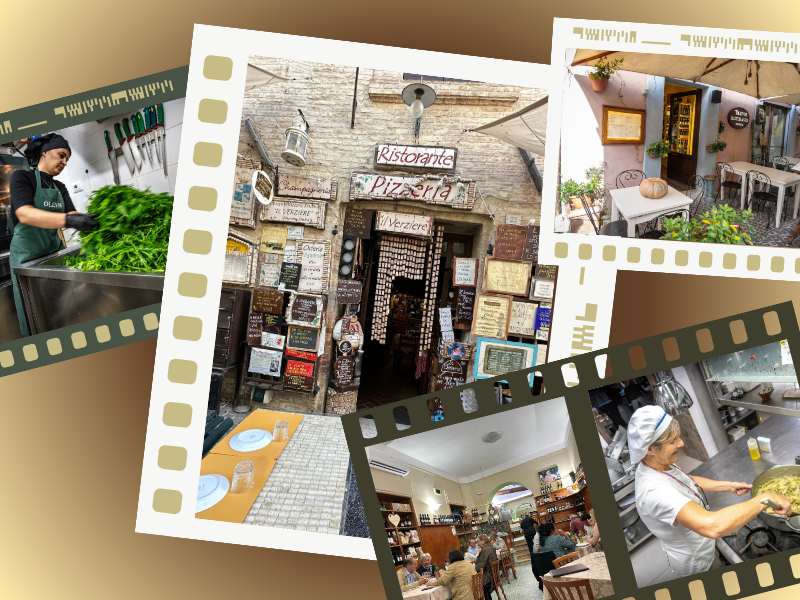
image-9.png

Understanding the Grades of Caviar: What They Mean and Why They Matter

Understanding the Grades of Caviar: What They Mean and Why They Matter

Caviar has long stood as a symbol of luxury, sophistication, and culinary excellence. For those exploring the world of caviar, understanding how it is graded can provide valuable insight into its quality, flavor, and overall experience. These grading standards help distinguish between varying levels of refinement and guide consumers in selecting the ideal product for their needs.

Caviar is generally classified into two primary grades: Grade 1 and Grade 2. These categories are determined based on several key characteristics, including the roe’s size, firmness, color, consistency, and taste. While grading systems may differ slightly depending on the producer or country of origin, the core principles are widely recognized across the industry.

Grade 1 Caviar: Premium Quality

Grade 1 caviar represents the highest standard available. This grade features large, intact eggs that are glossy in appearance, uniform in size and color, and firm to the touch. The flavor profile is typically rich, balanced, and elegant, with a smooth texture and a refined finish. The eggs offer a delicate pop when tasted, enhancing the sensory experience. This level of quality is usually achieved through careful harvesting from mature, healthy sturgeon. Grade 1 caviar is often reserved for upscale culinary presentations and fine dining experiences, where excellence in taste and appearance is essential.

Grade 2 Caviar: High Quality with Slight Variations

Grade 2 caviar remains a high-quality product but presents some minor deviations from the characteristics found in Grade 1. The eggs may be slightly smaller or softer, with less uniformity in color and texture. The flavor remains enjoyable, though it may be less complex or smooth compared to higher-grade roe. This type of caviar is frequently used in recipes or culinary applications where the roe complements other ingredients rather than serving as the main feature. It is also a popular option for those seeking an introduction to caviar at a more accessible price point.

Understanding the Grades of Caviar: What They Mean and Why They Matter

Additional Classifications: Species and Salt Content

Beyond the numeric grades, caviar is also categorized by the sturgeon species from which it is derived. Popular varieties include Beluga, Osetra, and Sevruga, each offering distinct flavors, textures, and colors. These differences are important when selecting caviar to match specific preferences or pairings.

Another commonly seen descriptor is “Malossol,” a Russian term meaning “lightly salted.” Malossol caviar is prized for its purity of flavor, as the minimal salt content allows the natural taste of the roe to shine. Additionally, fresh (non-pasteurized) caviar is generally considered superior in taste and texture when compared to pasteurized alternatives, which are heat-treated for extended shelf life.

Understanding caviar grading enables consumers to make informed decisions based on quality, budget, and intended use. Grade 1 caviar offers an exceptional experience for refined palates and special occasions, while Grade 2 provides a flavorful and more economical option. By considering the grade, species, and preparation style, one can fully appreciate the richness and tradition that caviar brings to the table.

What are your thoughts on caviar? Let us know in the comments!

FRESH-JALAPERO-INFUSED-OLIVE-OIL.jpg

Preserved to Perfection: Exploring Cured and Uncured Meats

Preserved to Perfection: Exploring Cured and Uncured Meats

Cured meats are those that have undergone preservation through the use of salt, nitrates, nitrites, or other curing agents. This process enhances flavor, improves texture, and prevents the growth of harmful bacteria. Curing may be accomplished through dry rubbing, brining, fermentation, smoking, or a combination of these techniques. These traditional methods allow meats to be stored for extended periods while also developing complex and concentrated flavors.

Uncured meats, by contrast, are preserved without the use of synthetic nitrates or nitrites. Instead, they often rely on naturally occurring preservatives found in ingredients such as celery powder, sea salt, or vinegar. The term “uncured” can be misleading, as these meats are still preserved to extend freshness and prevent spoilage. However, the methods used are generally more natural or minimally processed, which results in a milder flavor profile and a shorter shelf life.

The production process for both types begins with selecting high-quality cuts of meat, followed by the application of seasonings, preservatives, and, in some cases, beneficial bacteria. For cured meats, this may involve several weeks or months of aging in temperature- and humidity-controlled environments, which allows the meat to lose moisture and develop its signature texture and taste. Uncured meats are typically stored and processed in refrigerated conditions and consumed within a shorter timeframe.

Cured meats tend to exhibit stronger, saltier, and more robust flavors due to the curing agents and time-intensive aging process. The textures can range from firm and chewy to silky and tender, depending on the meat and the method used. Uncured meats offer cleaner, lighter flavors and are often preferred by those seeking less processed options. Both categories are popular in culinary applications, providing versatility across cold platters, warm dishes, appetizers, and snacks.

Common cured and uncured meats include:

  • Prosciutto (Cured): A dry-cured Italian ham known for its delicate, slightly sweet flavor and buttery texture. Often served thinly sliced on charcuterie boards, paired with melon, or layered in sandwiches.
  • Uncured Ham: Prepared without synthetic nitrates or nitrites, usually using celery juice or natural sea salt. It offers a similar appearance and texture to cured ham but with a milder, less salty flavor. Typically served baked, sliced in sandwiches, or used in breakfast dishes.
  • Salami (Cured): A fermented, air-dried sausage made with pork or beef and seasoned (seasoning examples include garlic, wine, and a variety of spices). Known for tangy, intense flavors and dense, chewy bites. Used in sandwiches, antipasto platters, or as a pizza topping.
  • Uncured Sausages: Made with natural preservatives and often seasoned with herbs or spices. These types of sausages are typically refrigerated and require cooking before consumption. They offer fresh, savory flavors and are commonly grilled, roasted, or sautéed.
  • Bacon (Cured): Salted and smoked pork belly with a rich, smoky, and salty flavor. Crisp or chewy, depending on preparation. Used widely in breakfast dishes, salads, sandwiches, or as a savory garnish.
  • Uncured Bacon: Prepared using natural ingredients such as celery powder and sea salt. Offers a similar taste and appearance to cured bacon, though often slightly milder. It must be cooked and refrigerated like traditional bacon.
  • Chorizo (Cured – Spanish style): A dry-cured, paprika-spiced sausage with bold, smoky flavors and a firm texture. Enjoyed sliced on tapas platters, mixed into rice dishes, or eaten as a snack.
  • Fresh or Uncured Chorizo (Mexican style): Uncooked and made without curing agents. Typically spicy, with a softer texture. Used in tacos, scrambled eggs, or as a filling for various dishes.
  • Pancetta (Cured): Unsmoked Italian cured pork belly, offering a rich and savory flavor. Commonly diced and cooked into pastas, soups, or sautéed vegetables.
  • Uncured Pork Belly: Often roasted or braised, this version uses natural seasoning and fresh preparation rather than curing. Offers a clean, rich flavor and a tender bite.
  • Bresaola (Cured): Air-dried, salted beef with a deep red color and lean texture. Mild and slightly sweet, served thinly sliced with olive oil and lemon or as part of antipasti.
  • Roast Beef (Uncured): Cooked beef typically served sliced and cold. Does not undergo curing but offers a juicy, beef-forward flavor. Common in sandwiches or deli-style platters.

Both cured and uncured meats offer distinct flavor, texture, and preparation advantages. The choice between them often depends on dietary preferences, desired shelf life, and intended culinary use. Whether incorporated into elegant charcuterie arrangements or hearty home-cooked meals, these meats provide richness, variety, and satisfaction across many cuisine styles.

What is your favorite cured or uncured meat? How do you enjoy it? Let us know in the comments!

x